Introduction
I’ve always believed in “sharpening the axe” – the idea that no matter how experienced you are, you must continuously hone your skills to stay effective.
After more than 30 years as an entrepreneur and the last 12 as a Non Executive Director with GTM (go-to-market) RevOps superpowers, it would be easy to rest on my laurels.
Instead, I recently found myself back in “school,” investing $2,500 and over 20 hours of my time to complete a Winning by Design Revenue Architecture live cohort, plus add in another 20 reading and studying the text book.
Why?
Because SaaS and technology moves fast. To excel in growth and revenue operations, continuous learning is key to staying boardroom-relevant and best-in-class in my craft.
This journey culminated in me becoming a Certified Revenue Architect, and it was worth every dollar and every minute.
I want to share that journey, blending story, some philosophy on lifelong learning, and plenty of practical insights I gained.
Consider this a field report from a veteran who went back to class to sharpen the axe and emerged with fresh tools to help SaaS companies scale smarter.
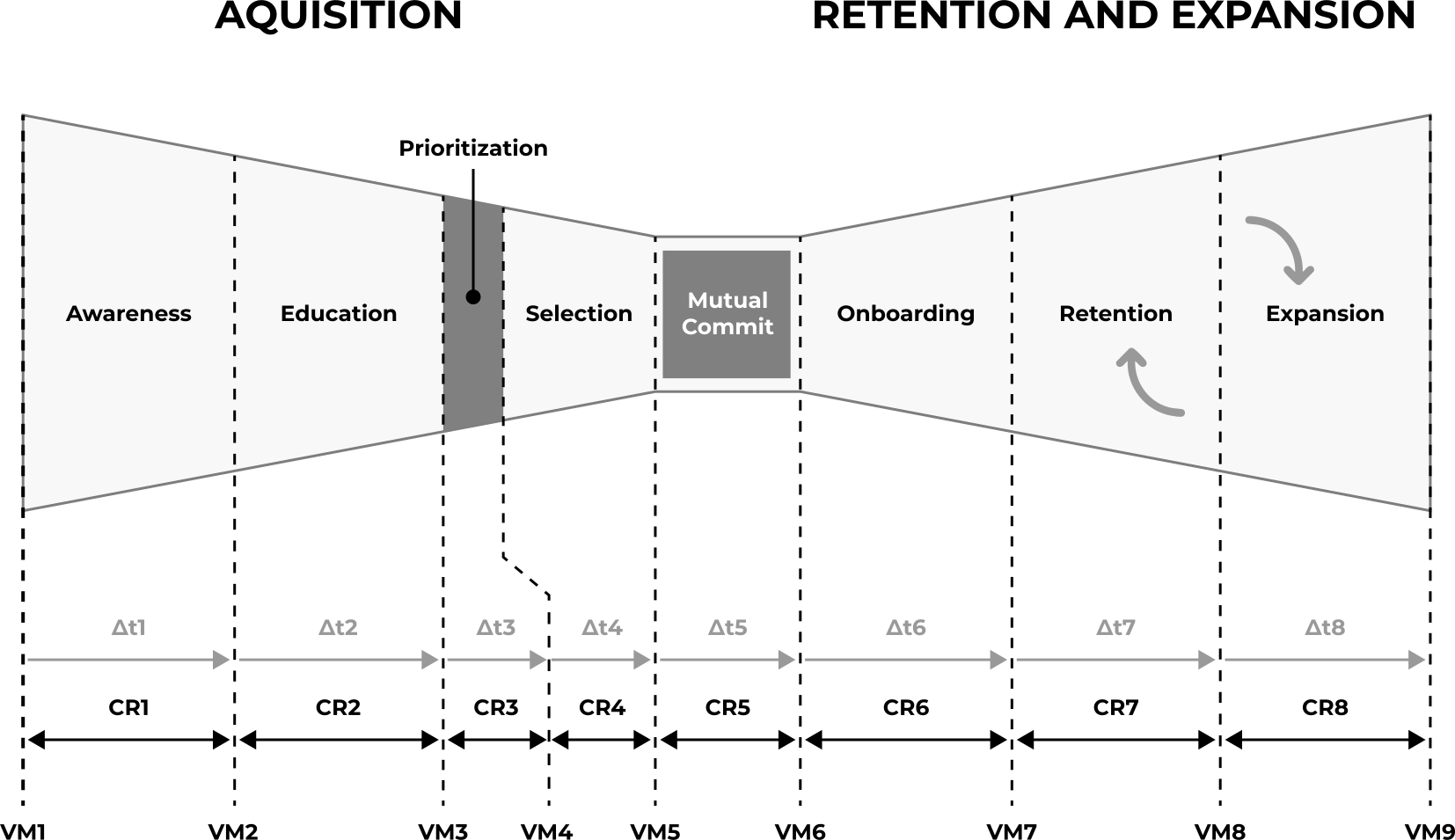
© RevenueArchitecture & The BowTie-Credit Winning By Design
Back to School: Embracing Continuous Learning in RevOps
Joining the first virtual zoom session of the Revenue Architecture course, I felt a mix of excitement and humility.
Here I was, decades into my career, sitting alongside a cohort of fellow revenue leaders from around the globe. We had SaaS CEOs, sales directors, RevOps experts – all hungry to learn the latest in GTM strategy.
One might ask, “Mike, after 30+ years, don’t you already know this stuff?”
The truth is, our field moves fast. What worked even 2 years ago in go-to-market is outdated today. As the niche has moved from Growth at all Costs to Capital Efficient Growth, new frameworks, data models, and methodologies emerge, and I owe it to my clients (and myself) to stay ahead of the curve.
I was reminded of that old story of two woodcutters:
One swings the axe continuously while the other pauses to sharpen his axe, and ends up cutting far more wood.
This cohort was me sharpening my axe.
It wasn’t easy, I dedicated evenings and weekends, trading downtime for deep dives into course workbooks and exercises. But I knew that investing in my own development would pay dividends in how I help SaaS founders scale their businesses.
Continuous learning isn’t just a feel-good slogan; it’s a survival strategy in a world where GTM strategies, technologies, and buyer behaviors evolve constantly.
Crucially, this wasn’t just any online course. It was a live, intensive cohort led by the experts at Winning by Design (WbD) – a firm renowned for scientific, data-driven revenue models and the curriculum demanded full focus.
If you sign up for this, be ready to bring your A-game. I certainly did, approaching it with the same seriousness as any business investment.
The Winning by Design Revenue Architecture Cohort Experience
From day one, it was clear this was a world-class learning experience. Our sessions were facilitated by Roee Hartuv – himself a highly experienced Revenue Architect at Winning by Design – who somehow made a 2-hour session on the Mathematical Model feel like a casual 10-minute conversation (a true gift of great teaching).
The course ran across six live 2-hour sessions over two weeks, with a certification exam held in week three. No gimmies here, I had to earn that Certified Revenue Architect certification and title, through understanding and applying the concepts.
What I loved most was the cohort dynamic. I wasn’t just learning from instructors, but also from peers. I had the privilege of collaborating with and learning from Nick Buxton, Jos de Wit, Mats Forsgren, and others, all talented revenue leaders who brought real-world perspectives to our discussions.
It felt less like a class and more like a brain trust of SaaS growth practitioners swapping war stories and strategies. Nick, for instance, comes from an engineering background and had been a fan of WbD for years.
During one session discussion, he shared his views on a quote from Jacco van der Kooij the founder of Winning by Design, that stuck with all of us:
“Recurring revenue is the result of recurring impact.”
In other words, if you want customers to stay and spend more, you must keep delivering value after the initial sale, a reminder that echoed throughout the course.
The energy in our virtual “classroom” was infectious. We debated how Net Revenue Retention (NRR) is the lifeblood of SaaS, dissected case studies, and even role-played scenarios.
Jacco's influence was ever-present through the curriculum, and I had the privilege to interview him on my Force & Friction podcast listen here to his episode, where we dove deep into the Bowtie model and his broader philosophies around scaling SaaS.
By the end of the program, not only did I pass the exam (phew!), I also came away with a powerful sense of community. As Nick noted in a LinkedIn shoutout, going through the course with a strong cohort of revenue leaders and making great connections was an unexpected bonus.
We weren’t just learners; we became a support network for each other.
And yes, I’ll admit it: seeing that Certified Revenue Architect badge pop up on my LinkedIn felt good. It was a symbol of commitment – proof that even as a seasoned pro, I’m willing to put in the work to stay at the top of my game.
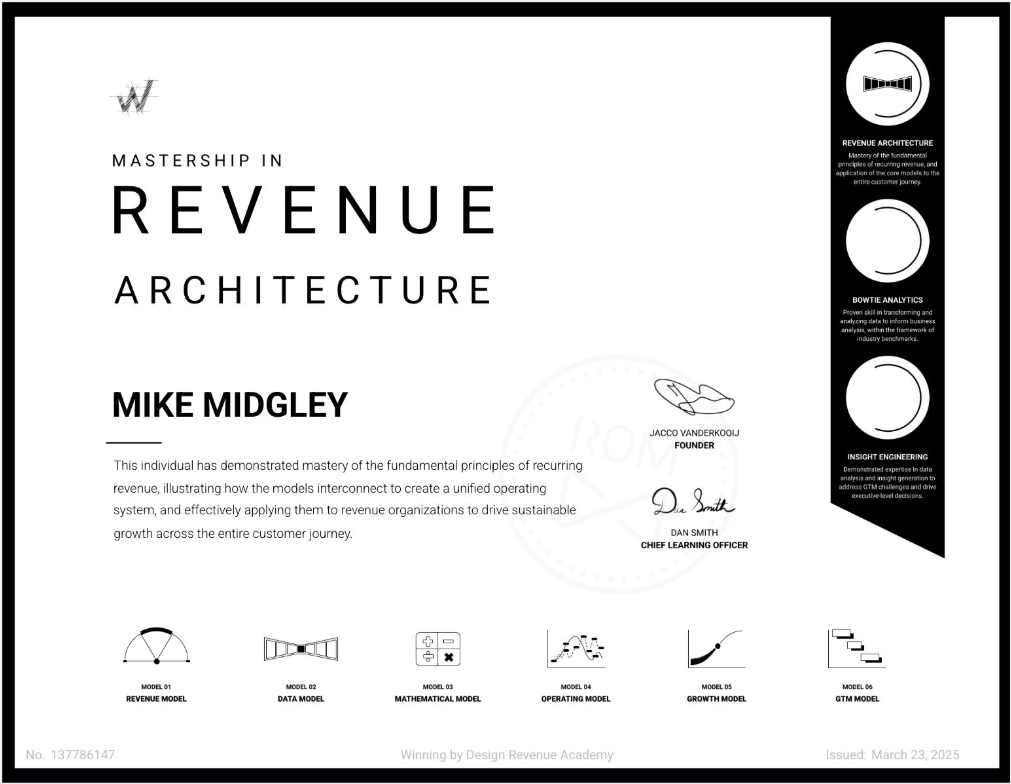
From Bowties to Growth: Inside the 6 Models of Revenue Architecture
One of the core reasons I took this course was to deepen my mastery of the Revenue Architecture framework, which is built around six integrated models.
I was already familiar with some concepts (like the famous Bowtie model), but I knew there was more to learn. By the end of week 2, I had a newfound appreciation for how these six models interconnect to form a holistic blueprint for sustainable revenue growth.
1. The Revenue Model
We explored monetization strategies across a spectrum, ownership, subscription, and consumption-based – and their impact on GTM, velocity, and customer expectations. This taught me how to assess a company’s revenue structure and align the right go-to-market motion accordingly.
2. The Data Model (Bowtie)
The Bowtie reframes the traditional funnel, extending the model beyond acquisition and into post-sale. It ensures that Marketing, Sales, and CS are aligned on the same KPIs across the entire customer lifecycle, because in SaaS, the right side of the Bowtie (onboarding, retention, expansion) is where 72%–93% of LTV happens.
3. The Mathematical Model
This framework breaks the illusion that growth is purely linear. Instead, it’s non-linear, compound, and incremental. We studied how small tweaks to multiple conversion or velocity variables can exponentially boost ARR – and how identifying these levers is key to efficient scaling.
4. The Operating Model
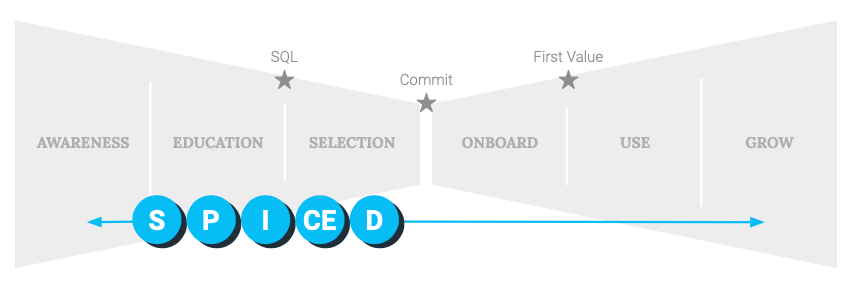
The Operating Model is about having one consistent way of working, SPICED methodology, shared terminology, and aligned handoffs between departments. For me, this reinforced how RevOps must build and maintain the connective tissue across departments to avoid internal friction.
5. The Growth Model
This model provided the map for what to focus on at each stage, from $1M to $50M+ ARR. I found this especially valuable in advising clients on what systems and talent need to evolve as they transition between stages.
6. The GTM Model
This model taught us how to match deal type with the right sales motion, a principle I’ve since deployed with several clients. From product-led to enterprise field sales, choosing the wrong motion for your ACV/volume mix can sink your margins before you even scale.
The NXD Perspective: Why This Certification Matters
Let me take a moment here and zoom out. While GTM RevOps is my superpower, I am first and foremost a Non-Executive Director.
It’s in the boardroom – not just the engine room – where I add value to SaaS founders and management teams.
This certification wasn’t just about levelling up a technical skillset. It was about staying relevant as a strategic advisor, so I can lead and challenge founders confidently on go-to-market decisions that directly impact valuation, retention, and investor confidence.
As an NXD, I’m often tasked with bringing clarity, confidence, and challenge to the board – and that requires my own axe to be razor sharp.
Conclusion: Never Stop Sharpening Your Axe
Emerging from the Winning by Design program, certificate in hand, I’m rejuvenated and more equipped than ever to drive growth for SaaS companies.
However, perhaps the most important takeaway of all is the validation of a lifelong philosophy:
Never stop learning.
The moment we think we’ve “figured it all out” is the moment our axe starts getting dull.
No matter how many companies I’ve scaled or how many boardroom battles I’ve fought, there’s always a new framework, a new technology, or a new perspective waiting to make me even better.
So to all the SaaS founders and revenue leaders reading this:
How are you sharpening your axe?
The market isn’t standing still, and neither should we. Whether it’s through formal courses, executive coaching, or carving out time to reflect and upskill, make the investment in yourself. Your future self, and your company will thank you for it.
And if you’re a SaaS founder between $1M and $50M ARR, looking to scale with precision, I’d love to chat.
Let’s make sure you’re not just swinging harder, but swinging smarter.
After all, a sharper a axe makes for a much better cut.
Always here to help you start, grow, and thrive. Let me know how I can support your next big move.