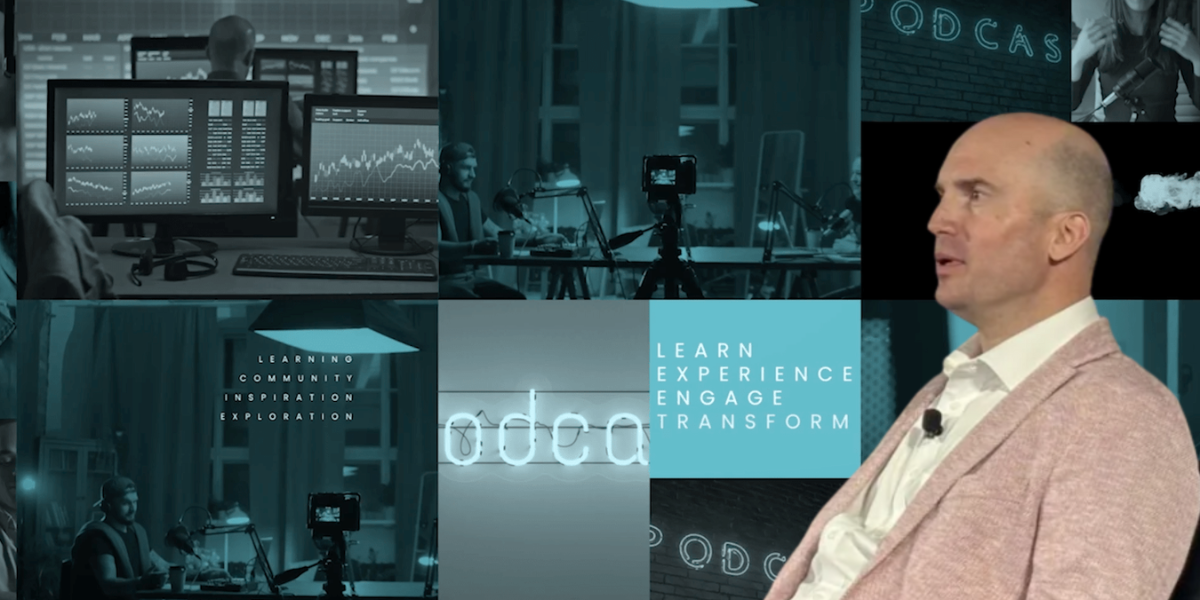



Welcome to the Force & Friction Podcast, where we break down what really moves the needle in GTM, RevOps, AI, partnerships, and SaaS growth. Today, we're joined by Lorenzo Serva, Senior Manager of Customer Success at Dynatrace and recognised as the APAC CSM of the Year.
With over a decade of experience leading CS teams across Australia, New Zealand, ASEAN, and India, Lorenzo shares his expert insights on one of the most critical and often broken processes in SaaS: the handoff from sales to customer success.
We explore why this handoff is so prone to failure, the unique challenges and opportunities in the APAC region, and the non-negotiables for building a high-performing, customer-centric CS team.
With over a decade of experience leading CS teams across Australia, New Zealand, ASEAN, and India, Lorenzo shares his expert insights on one of the most critical and often broken processes in SaaS: the handoff from sales to customer success.
We explore why this handoff is so prone to failure, the unique challenges and opportunities in the APAC region, and the non-negotiables for building a high-performing, customer-centric CS team.

Lorenzo Serva
As a strategic Customer Success leader with over a decade of experience across APAC and EMEA, I specialize in building high-performing teams, driving customer-centric transformations, and unlocking recurring revenue growth for SaaS and enterprise platforms.
My focus is on leading initiatives that scale operations, improve retention, and deliver measurable business impact.
My focus is on leading initiatives that scale operations, improve retention, and deliver measurable business impact.
Watch the Episode:
Here are the core areas we discuss in today's episode:
1. The Broken Sales-to-CS Handoff: A Crisis of Fragmentation and Misalignment
Lorenzo kicks off the conversation by dissecting the common failure points in the sales-to-CS handoff. He argues that the crisis stems from a fundamental disconnect between siloed teams and fragmented processes.
While sales teams are laser-focused on closing deals quickly, CS teams are left to navigate a complex post-sale environment with misaligned incentives and a lack of shared context.
This often leads to a frustrating customer experience where the value promised during the sales process is not delivered, and the customer is left to navigate the onboarding process alone.
While sales teams are laser-focused on closing deals quickly, CS teams are left to navigate a complex post-sale environment with misaligned incentives and a lack of shared context.
This often leads to a frustrating customer experience where the value promised during the sales process is not delivered, and the customer is left to navigate the onboarding process alone.
"First problem is that often you work with, solid teams and fragmented processes. Usually what you find is that the sales organization is very invested in the process. There's a very defined way to run the opportunity out to closure. And then, on our side, we get very excited after the customer has his first value event, so that's where we start kicking in with playbooks and the likes. time in the middle, there's an expectation the customer will somehow be able to navigate that. There's an onboarding program, there's a focus on it, but the reality is that there's an expectation the customer will be somehow be able to function 100%. That's usually not the case."
Lorenzo emphasizes that this disconnect is often exacerbated by a lack of trust and continuity, where the economic buyers who made the purchase decision are not the same people who will be using the product.
This creates a critical need for CS teams to build relationships from the bottom up, ensuring that end-users understand the value proposition and become champions for the solution within their organization.
This creates a critical need for CS teams to build relationships from the bottom up, ensuring that end-users understand the value proposition and become champions for the solution within their organization.
2. The Partner Ecosystem: A Double-Edged Sword in the APAC Handoff
The conversation then shifts to the complexities of the partner ecosystem in the APAC region, where a significant portion of business is conducted through channel partners.
Lorenzo explains that partners can be a powerful engine for growth, but they also add another layer of complexity to the sales-to-CS handoff. He stresses the importance of qualifying partners early in the process to understand their motivations and capabilities, as not all partners are created equal.
Lorenzo explains that partners can be a powerful engine for growth, but they also add another layer of complexity to the sales-to-CS handoff. He stresses the importance of qualifying partners early in the process to understand their motivations and capabilities, as not all partners are created equal.
"In this region, partner ecosystem is absolutely a make-to-bracket. It's so important. Do I see a difference? Yes, massive... The ecosystem needs to be incentivized to perform at their best at the time of require performance, so you might have partners that are very good at opening doors and winning your deals. Then you want to have a partner that really understands your solution to implement at best practices. But then you might need another partner that is the one that brings the solution into the wider technology transformation journey."
Lorenzo's insights highlight the need for a nuanced approach to partner management, where CS teams work closely with partners to ensure a seamless customer experience.
This includes aligning on incentives, providing partners with the necessary training and resources, and establishing clear lines of communication to avoid confusion and ensure that the customer's needs are always the top priority.
This includes aligning on incentives, providing partners with the necessary training and resources, and establishing clear lines of communication to avoid confusion and ensure that the customer's needs are always the top priority.
3. Beyond the Playbook: Adapting CS Strategies for the Diverse APAC Market
One of the most compelling parts of the discussion is Lorenzo's take on the importance of adapting CS playbooks for the diverse cultural and business landscape of the APAC region.
He argues that a one-size-fits-all approach is doomed to fail, and that CS teams must be willing to localize their strategies to meet the unique needs and expectations of each market. This requires a deep understanding of local customs, communication styles, and decision-making processes.
He argues that a one-size-fits-all approach is doomed to fail, and that CS teams must be willing to localize their strategies to meet the unique needs and expectations of each market. This requires a deep understanding of local customs, communication styles, and decision-making processes.
"Where you need to be more mindful of, of the engagement is you want to make sure that you're solving for the customer and not for your playbook. And that's something that we do a lot of work in the regions. Customers sometimes will tell you, well, look, sure, I understand that this… you might have this playbook that you think I need to do these three things over the next 3 months. That doesn't really apply here."
Lorenzo's approach to leadership is grounded in humility and a willingness to learn from his team. He empowers his team members to be cultural ambassadors for their respective regions, trusting them to provide the necessary context and insights to ensure that the company's strategies are relevant and effective.
This emphasis on localization and cultural empathy is a powerful lesson for any company looking to expand its footprint in the APAC region.
This emphasis on localization and cultural empathy is a powerful lesson for any company looking to expand its footprint in the APAC region.
4. From Hope to Certainty: The Power of Data-Driven CS Leadership
The conversation also delves into the critical role of data in driving proactive and impactful customer success. Lorenzo is a strong advocate for using a combination of leading and lagging indicators to gain a holistic view of customer health and identify potential risks and opportunities early in the process.
He believes that data is the key to moving from a reactive,
He believes that data is the key to moving from a reactive,
hope-for-the-best" approach to one that is strategic and predictive.
"They matter because they allowed for early intervention. And also, they allowed for validation of value hypotheses. So the customer got sold on some value to be delivered, it was a promise of value, you can validate a hypothesis early in the piece. And if you need to course correct, you will have the benefit of being early in the piece, so you can take actions, ahead, or faster, you would halfway through."
He envisions a future where AI will enable hyper-personalized, customer-specific health scores, allowing CS teams to anticipate customer needs and proactively guide them toward their desired outcomes.
This data-driven approach is not just about reporting on past performance; it's about shaping the future of the customer relationship and ensuring that the value delivered is always aligned with the customer's evolving goals.
This data-driven approach is not just about reporting on past performance; it's about shaping the future of the customer relationship and ensuring that the value delivered is always aligned with the customer's evolving goals.
5. The Blueprint for a High-Performing CS Team: Alignment and a Customer-Centric Journey
Finally, Lorenzo provides a blueprint for building a high-performing CS team. He emphasizes two core pillars: deep internal alignment and a meticulously designed customer journey.
For internal alignment, he stresses the importance of CS teams learning the language of sales and understanding the entire revenue motion, from top-of-funnel activities to pipeline management. This shared understanding builds credibility and fosters a truly collaborative environment.
For internal alignment, he stresses the importance of CS teams learning the language of sales and understanding the entire revenue motion, from top-of-funnel activities to pipeline management. This shared understanding builds credibility and fosters a truly collaborative environment.
"Internally, I would make sure, 100% sure, that there's, alignment with, top of the funnel sales engineering and sales. So. I don't know if your organization is doing MedPick or Challenger Sales, whatever methodologies used, get familiar with that... Number two, make sure that, apart from the hygiene factors... make sure that you've got a well-defined customer journey, and just not a copycat playbook."
He also warns against the dangers of a "copycat" customer journey, urging leaders to design a journey with the end in mind: delivering value for the customer and creating moments for the CS team's capabilities to shine.
This involves building value capture into the core of the CS motion and being able to clearly articulate the impact that the team is having on the customer's business.
This involves building value capture into the core of the CS motion and being able to clearly articulate the impact that the team is having on the customer's business.
Learn more about Dynatrace here: 
Final Thoughts:
Lorenzo Serva's insights provide a powerful roadmap for any organization looking to elevate its customer success function. His emphasis on fixing the foundational sales-to-CS handoff, adapting to diverse market dynamics, leveraging data for proactive engagement, and building a truly aligned and customer-centric team are essential principles for success in the modern SaaS landscape.
In a world of recurring revenue, the conversation doesn't end at the sale, it evolves. As Lorenzo makes clear, a high-performing CS team is the engine that drives that evolution, ensuring sustainable growth and long-term customer relationships.
Ready to be Our Next Guest Contributor?

Your Host:
A little about me, the host the show. Please connect with me on LinkedIn I'd love to have you as part of our professional network

Mike Midgley runs a portfolio career, a dynamic hands on digital entrepreneur, founder of the Scrubbing Squad, NXD, strategist, public speaker, Winning by Design certified Revenue Architect and Host at The Force & Friction Podcast.
Mike has achieved multiple exits over a 30+ year career, raised Venture Capital and franchised his businesses 68 times.