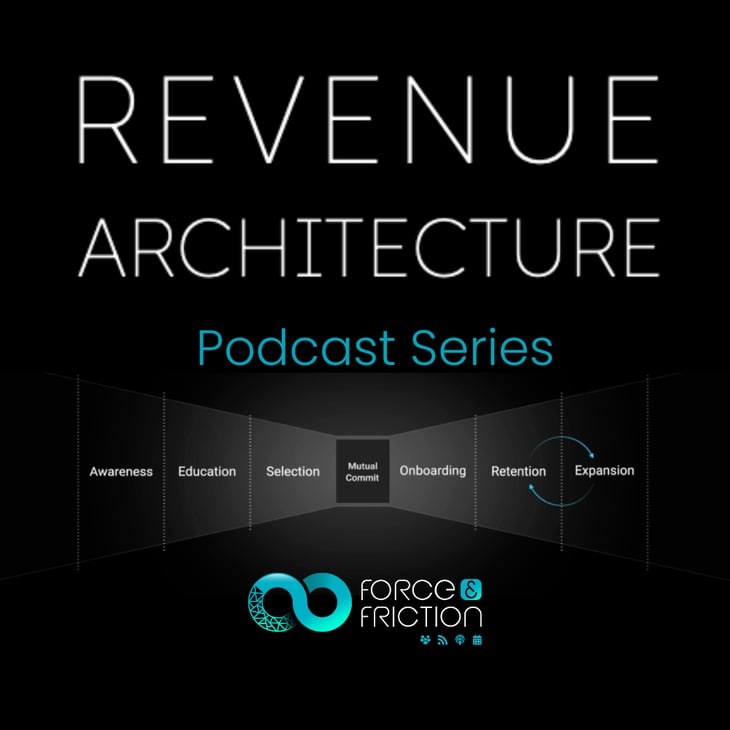
© Bowtie and Revenue Architecture - credit Winning by Design
Welcome to the Season 5 premiere of the Force & Friction Podcast! We are continuing our Revenue Architecture series, where we will break down each of the six core models from Winning by Design that are essential for building a sustainable, high-growth SaaS company.
In this episode, we are joined by Charlie Moss, a proven SaaS revenue leader who has spent over two decades helping B2B companies drive recurring revenue growth.
Charlie guides us through a deep dive into the Winning by Design Operating Model. This is the blueprint for how an organization delivers sustainable, recurring revenue across the entire customer journey.
We explore what it is, why it's critical for moving beyond chaotic, siloed functions, and how you can implement it to align your GTM teams, data, and actions to consistently deliver results and scale without chaos.
Watch the Episode:
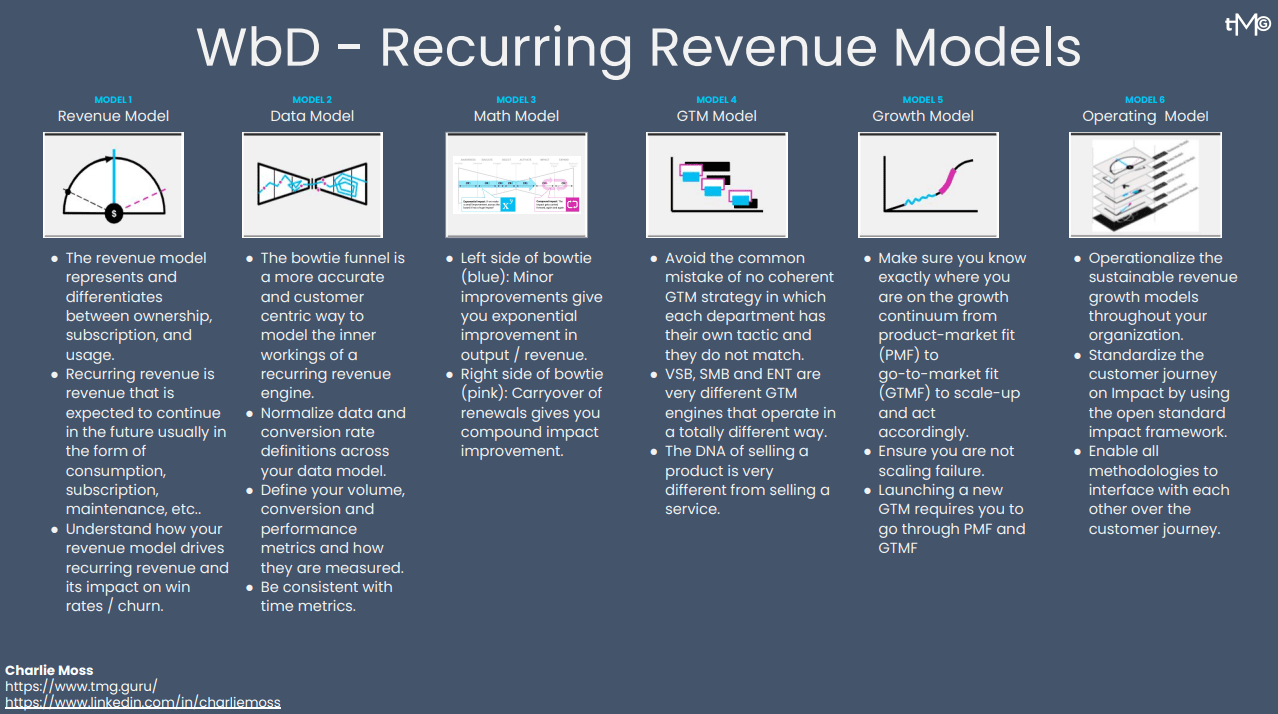
What is the Operating Model?
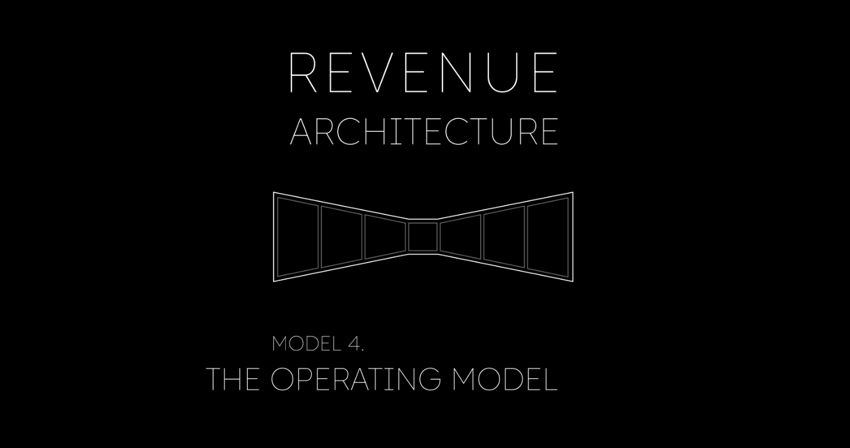
The Operating Model is the blueprint for your "Revenue Factory." It's an implementation of Revenue Architecture that ensures you can deliver a quality product that produces revenue growth in a cost-efficient way. Its primary goal is to solve the challenge of "incompatible means and myriad methods" across GTM teams by creating true, system-wide interoperability.
It is built on three foundational components, as defined by Winning by Design:
1. A Standard (Data) Model: The Bowtie
First, the Operating Model must cover the entire customer journey in a standardized model. The Winning by Design framework uses The Bowtie for this. This is "Component III: An Open System To Port It To." It creates a single, unified map for the whole customer journey (TAM to LTV), preventing the "disjointed approach" where departments operate independently, which leads to inefficiencies and makes it "challenging for customers to experience consistent, recurring impact."
"The root cause of the GTM issue is that the number of interconnections between various means and methods increases exponentially with each additional GTM motion; this causes cost to escalate and productivity to decline."
By standardizing on the Bowtie, you create a stable, open system where all GTM motions can be architected, preventing the unscalable and unsustainable chaos that comes from siloed operations.
2. A Common Language: Impact
Second, the model establishes a common language that is centered on what the customer gets out of the relationship. This language is Impact. The framework is explicit: "The Customer Journey is Based on an Impact Journey." This means every action is mapped to a common goal, shifting the focus from internal processes to the customer's desired outcome.
"Impact refers to what tangible results, outcome, or output your product or service brings to a customer."
This common language distinguishes between Rational Impact (quantitative, measurable benefits to the company) and Emotional Impact (qualitative, emotive benefits to the individual), recognizing that buying decisions are driven by both.
3. A Uniform Methodology: SPICED
Finally, the Operating Model creates an open interface that connects everything. This is "Component II: A Standardized Interface," and the methodology is SPICED. It is the "uniform customer-centric methodology" that allows different GTM means and methods (like MEDDIC, ABM, etc.) to interact seamlessly.
"SPICED is an acronym that operates as a standard interface enabling various methods and means to interact seamlessly. It creates a common language across departments, enhancing collaboration and easing role transitions."
SPICED is the crucial layer that ensures interoperability between all actions. It is not just a sales framework; it is the connective tissue for lead generation, deal qualification, selling, and customer success, ensuring that every part of the Revenue Factory is speaking the same language of Impact.
The Real Job of the Operating Model
The Operating Model’s job is to transform your GTM efforts from a collection of chaotic, incompatible parts into a unified, efficient Revenue Factory.
It defines:
- How to connect disparate teams and tools with a shared map (The Bowtie).
- How to align everyone on a single, customer-focused goal (Impact).
- How to ensure different GTM motions can work together seamlessly (SPICED).
- How to scale revenue growth in a cost-efficient, sustainable, and predictable way.
It is the essential architecture for moving from a world of chaos to a world of order.
Because, as the framework makes clear:
Recurring Revenue is the result of Recurring Impact. The Operating Model is the system you build to deliver that impact, consistently, across the entire customer journey.
Here are the core areas we discuss in today's episode:
The Problem of Chaos: Why GTM Teams Need a Unified Operating Model
Charlie opens by addressing a universal challenge: the friction caused by incompatible tools, metrics, and methods across Sales, Marketing, and Customer Success. This misalignment leads to escalating costs, declining productivity, and a chaotic customer experience.
"The root cause of the GTM issue is that the number of interconnections between various means and methods increases exponentially with each additional GTM motion; this causes cost to escalate and productivity to decline."
He explains that without a standardized blueprint, teams operate in silos, creating a disjointed journey where the customer is the one who ultimately suffers. The solution isn't to eliminate tools, but to create interoperability through a shared system.
Anchoring in the Customer Journey, Not Internal Processes
A core theme is the shift from an inside-out to an outside-in perspective. Many companies design their operations around their internal teams and processes, but a true Operating Model must be anchored in the customer's journey.
"The Operating Model should be rooted in the customer journey — not internal processes."
Charlie discusses what it truly means to build a customer-centric system, aligning every team across the bowtie funnel to contribute to customer impact in a consistent, measurable, and scalable way.
SPICED: The Common Language for Your Entire Revenue Engine
The conversation dives into the practical application of the SPICED framework as the connective tissue for the entire Operating Model. It's more than just a sales discovery tool; it's a universal language that ensures every team is speaking the same dialect of customer impact.
"SPICED creates a Uniform Methodology that acts as an interface between crucial actions from all GTM teams across all GTM motions."
We explore how SPICED provides the "open interface" that connects everything from lead generation and deal qualification to customer success and expansion, ensuring a seamless flow of information and value.
Emotional vs. Rational Impact: The Human Element of Buying Decisions
Charlie breaks down the two crucial types of impact that drive every sale: Rational and Emotional. While Rational Impact (like ROI) benefits the company, Emotional Impact benefits the individual, and it's often the more powerful driver.
"Humans in most cases make an Emotional decision. We first decide what we believe is the right solution. We then rationalize that decision with facts and figures."
Understanding this principle is key to effective selling. The Operating Model ensures that GTM teams are equipped to uncover and speak to both the personal and professional wins a customer will experience.
Final Thoughts
Looking ahead, Charlie predicts that the Operating Model will become the indispensable "ERP of GTM." As companies scale, the need for a single, unified system to manage data, teams, and processes for recurring revenue will become non-negotiable.
"The Operating Model will become the “ERP” of GTM, every org will need one that unifies data, teams, and process for recurring revenue success."
His final message is that achieving this level of operational excellence isn't just about top-of-funnel metrics; it's about orchestrating the entire revenue engine, from the first touchpoint to renewal and expansion, to create a truly seamless and impactful customer journey.
The Revenue Architecture Series
Watch more episodes from the Revenue Architecture Series - get started with the founder of Winning By Design Jacco van der Kooij's interview - watch that here:

The Revenue Architecture Textbook
Order you text workbook on Revenue Architecture - more than a 'read' this is a comprehensive workbook to ensure you up skill your knowledge.
Ready to be Our Next Guest Contributor?
Your Host:
A little about Mike who hosts the show. Please connect with me on LinkedIn I'd love to have you as part of our professional network.