© Bowtie and Revenue Architecture - credit Winning by Design
Welcome to the Force & Friction Podcast, where we break down what really moves the needle in GTM, RevOps, AI, partnerships, and especially in and around the SaaS growth models.
Today we continue our Revenue Architecture series and are joined by Kerry Curran, Chief Revenue Officer and founder of RBMA (Revenue-Based Marketing Advisors).
With over 20 years of experience in the digital marketing and agency world, Kerry has made it her mission to transform agencies from a state of referral dependency to one of revenue predictability.
She does this by applying proven B2B SaaS growth principles to the services sector, a space that has traditionally been stuck in a feast-or-famine cycle of client acquisition. We discuss the agency growth paradox, the challenges of applying SaaS frameworks to service-based businesses, and the critical role of a unified revenue architecture.
Watch the Episode:
Here are the core areas we discuss in today's episode:
1: The Agency Growth Paradox: Why Are Agencies the "Cobbler's Kids"?
Kerry kicks off the conversation by highlighting a long-standing irony in the agency world: agencies are experts at driving growth for their clients, but they often struggle to do the same for themselves. They are the proverbial "cobbler's kids" with no shoes. This leads to a feast-or-famine cycle of revenue, where agencies are either scrambling to find new clients or struggling to keep up with the demands of their existing ones.
"We all talk about how agencies really are the cobbler's kids. And then, you know, we all chuckle, haha, like, we do it for our clients, but we can't do it for ourselves. But that still hasn't really changed that much, for the most part, in the past 20 years. So, what we're seeing is while we can do great, lead gen, or brand awareness, or conversion focus campaigns, omnichannel for our clients, agencies are not great at doing it, you know, building those out in a way for themselves."
Kerry argues that this is because agencies are often so focused on delivering for their clients that they neglect their own marketing and business development. They rely on referrals and inbound leads, which are unpredictable and often lead to a reactive, rather than proactive, approach to growth.
2: The Revenue-Based Marketing Philosophy: Every Dollar Should Drive Revenue
Kerry's solution to this problem is her revenue-based marketing philosophy, which is built on the principle that every marketing dollar should drive revenue. This doesn't mean that every investment needs to have a direct, one-to-one attribution to a sale, but it does mean that every investment should be made with a clear understanding of how it will contribute to the overall business goals.
"It's a complicated statement, because yes, you cannot directly attribute every dollar to spent to a dollar earned. And, however, you do need to, be smart and strategic about your investments, you know, so you can't just, do the shiny object platform, or, you know, I heard once of a pretty popular brand, this whole. strategy where they flew an influencer on a private jet, and this was pre-influencer marketing. This was, like, 5 plus years ago. And, But yet, and, you know, all this fanfare on the jet, but then they didn't do anything with the content, or they didn't, you know, so things like that, or like, you know, pop-ups that, again, are great for branding in that small, group of people who are there. But taking it a step further to build it into your programming your content strategy so that it then can drive more acquisition or awareness."
This is a crucial distinction. It's not about abandoning brand-building activities or long-term investments. It's about being strategic and intentional with your marketing spend, and ensuring that every activity is part of a larger plan to drive sustainable growth.
3: Applying SaaS Frameworks to the Service World: The Bowtie and the ICP
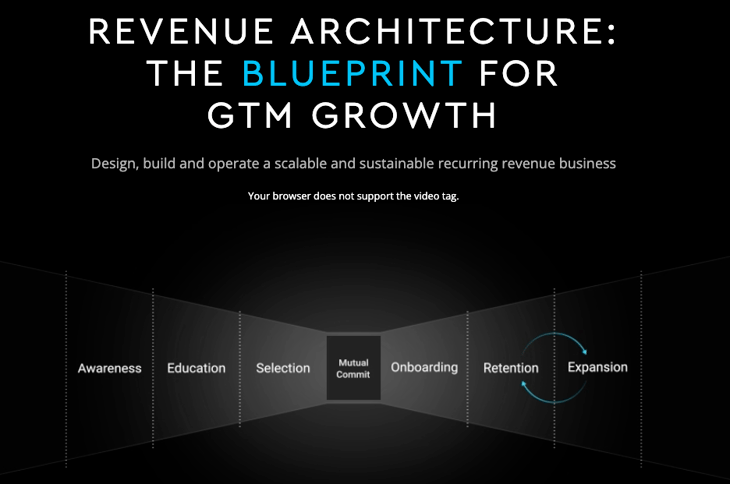
So how do you build a sustainable growth engine for an agency? Kerry is a big proponent of applying the Winning by Design Revenue Architecture, or "bowtie" framework, to the service world. This framework, which was originally developed for SaaS companies, provides a structured approach to mapping out the entire customer journey, from initial awareness to renewal and expansion.
"The key to revenue architecture, and the Winning by Design Revenue Architecture, or bowtie framework, which I'm a bit obsessed about, but… is, and what all the agencies need to lean into, is what the key to that framework, regardless of the size of the business, is knowing your ICP to the point of what type of business or company or brand can I drive the greatest impact for? Who is most likely to renew and expand with me year over year, and then taking that into your ICP data. And that's the part that's missing, I think, is, you know, the analysis into who are we best suited for. And who do we grow with and resonate most, the most with? And hyper-focusing there to build that out."
This is where many agencies fall short. They don't have a clear understanding of their Ideal Customer Profile (ICP), and they don't have a structured process for moving customers through the bowtie. By applying the principles of revenue architecture, agencies can create a more predictable and scalable growth model.
4: The Challenge of Selling a "Squishy" Solution
Of course, applying a SaaS framework to a service-based business is not without its challenges. As Kerry points out, agencies are not selling a tangible product with a clear set of features and benefits. They are selling a "squishy" solution that is customized to each client's unique needs.
"When you're selling an agency, or the buyer's choosing an agency, you're not selling a software or a, you know, package solution. You're selling a customized, proof of concept, or belief in a proof of concept, and belief in trust in the people on the team that are going to deliver that for you. And so, it's… what you're buying is a bit more squishy than, I'm buying this tech that does this, this, and this."
This makes the sales process more complex and the buying cycle much longer. It also means that agencies need to be much more focused on building trust and relationships with their prospects. They can't just rely on a slick demo or a list of features. They need to demonstrate a deep understanding of the client's business and a genuine commitment to their success.
5: The Unified Revenue Team: Breaking Down the Silos
To overcome these challenges, Kerry argues that agencies need to adopt a unified revenue architecture and a unified revenue team. This means breaking down the silos between marketing, sales, and account management, and creating a single, integrated team that is focused on the entire customer journey.
"The ones that work are the ones that start from the top down, so the CEO has to own it. And give direction to all of the stakeholders to make sure there's that end-to-end, communication. that should be table stakes. The unsung hero is RevOps, who is making sure you're measuring every data point. So, knowing the margins, or the utilization costs for each client, existing client. Again, going back to, so understanding who's… who is driving the most revenue growth for you. While looking at where are we, in our forecast and pipeline, and what's accurate. And making sure that we're looking at the full picture."
This is a major cultural shift for many agencies, but it's essential for building a scalable and sustainable growth engine. By creating a unified revenue team, agencies can ensure that everyone is working together to deliver a seamless and value-driven experience for their customers.
Final Thoughts
Kerry Curran's insights are a powerful wake-up call for the agency world. For too long, agencies have been stuck in a reactive, referral-based growth model that is simply not sustainable in today's fast-moving business world.
By applying the principles of SaaS GTM and revenue architecture, agencies can create a more predictable, scalable, and profitable business. It's not an easy transition, but as Kerry argues, it's an essential one for any agency that wants to thrive in the years to come.
The Revenue Architecture Series
Watch more episodes from the Revenue Architecture Series - get started with the founder of Winning By Design Jacco van der Kooij's interview - watch that here:

The Revenue Architecture Textbook
Order you text workbook on Revenue Architecture - more than a 'read' this is a comprehensive workbook to ensure you up skill your knowledge.

Ready to be Our Next Guest Contributor?

Your Host:
A little about Mike who hosts the show. Please connect with me on LinkedIn I'd love to have you as part of our professional network.